

starts to blur


Mutant Lab / Younguk Yi / 2025
Before I start yammering, I will beg you to scroll on down and read the wonderful, breezy Q&A sesh we did with Kristina Ten for Just Talkin’ this week. I mean, read the whole newsletter, but if you’ve only got a second, skip my melancholy reports from the trenches of child-rearing and just cruise with Kristina for a bit.
That’s it. Onwards
Hi.
Skipped a week because I was in San Diego being told how cool everyone wants me to think AI is. But I’m back, and I have a slew of random thoughts to tide you over.
How did I feel about the most recent attempt by society to force convert me to kneeling to our future software overlords? Eh. Everything I heard made me feel like the future of copywriting was a creative assembly line and, if I was grateful enough, I had a future as a senior-level lever puller. To beat this metaphor a bit further, it felt like as if they were telling a ceramicist that they couldn’t work pots with their hands anymore, but it’s going to be great to quality control them when they come roaring out of the factory. Awkward conversations were had.
Having a kid often times feels like I’m staring at a photo that’s been double, sometimes triple, exposed. A photo where the kid is ostensibly the subject of the frame, but I can’t help but imposing my own experience on top of his. I can’t help but see his interactions with the world at the age of 2.5 in collision what I remember, or have been told were my experiences at 2.5. And from that I so often extrapolate what sort of life Beau will when he’s 5, 10, 15, 20, 25 and because that life is entirely an unknown, I can only see it as a sliding door version of my own. What really starts to blur my mental vision though is when I look at his (imagined) life at each of these stages and start to envision my life at this stages and then start thinking about my parent’s lives at these stages and what each of our experiences were, and are, and will possibly be. I can sometimes just altogether lose myself in what feels like an infinite number of future possibilities, all of them tumbling forward with a vapor trail of lived experience in their wake. It is, to say the least, a headier experience than I imagined parenting would be.
I was watching the kid the other day (because so much of parenting is just watching your child do things) and he was doing something particularly interesting, or strange, or memorable and I thought, “this small moment is something I’d like to remember but in the crush of all things child-related I don’t know if I will.” From there I start thinking about becoming the parent who records everything in every format. Who sits and records his kid eating dinner, watching basketball, building roads with off-brand Lego bricks, etc. etc. etc. until every hard drive and digital space is full of just hoarded memories. And in my most sentimental moments this seems appropriate; it seems okay to just collect every sound, every motion, every smell, every touch, because having a kid is nothing if not a constant reminder of how temporary everything is, and the only way I can think to make these flickers of existence permanent is by burning them into a cloud somewhere. I was told, with great seriousness, at the beginning of this kid journey to “record everything” and I laughed because I don’t record anything, but now, here I am, watching as “time goes fast” takes an ultrasonic new meaning, and I get it. I understand how amazing it is to watch this kid become a different being each and every morning, and how tragically, inevitably sad it is that with each change, he leaves a version of himself in the past that Nor and I won’t ever get back.
And maybe that’s the biggest thing I’ve learned in 2.5 years as a parent, that there is no emotional black and white in raising a child. For every incredible, heart-breaking second, there is an equally devastating one. A kid is a companion in your life journey, but more so a reflection on how fast your life is speeding by. And though I am so happy to be on this path, it is so sad to see the distance we’ve already covered spooling out behind us.
things we’re doing
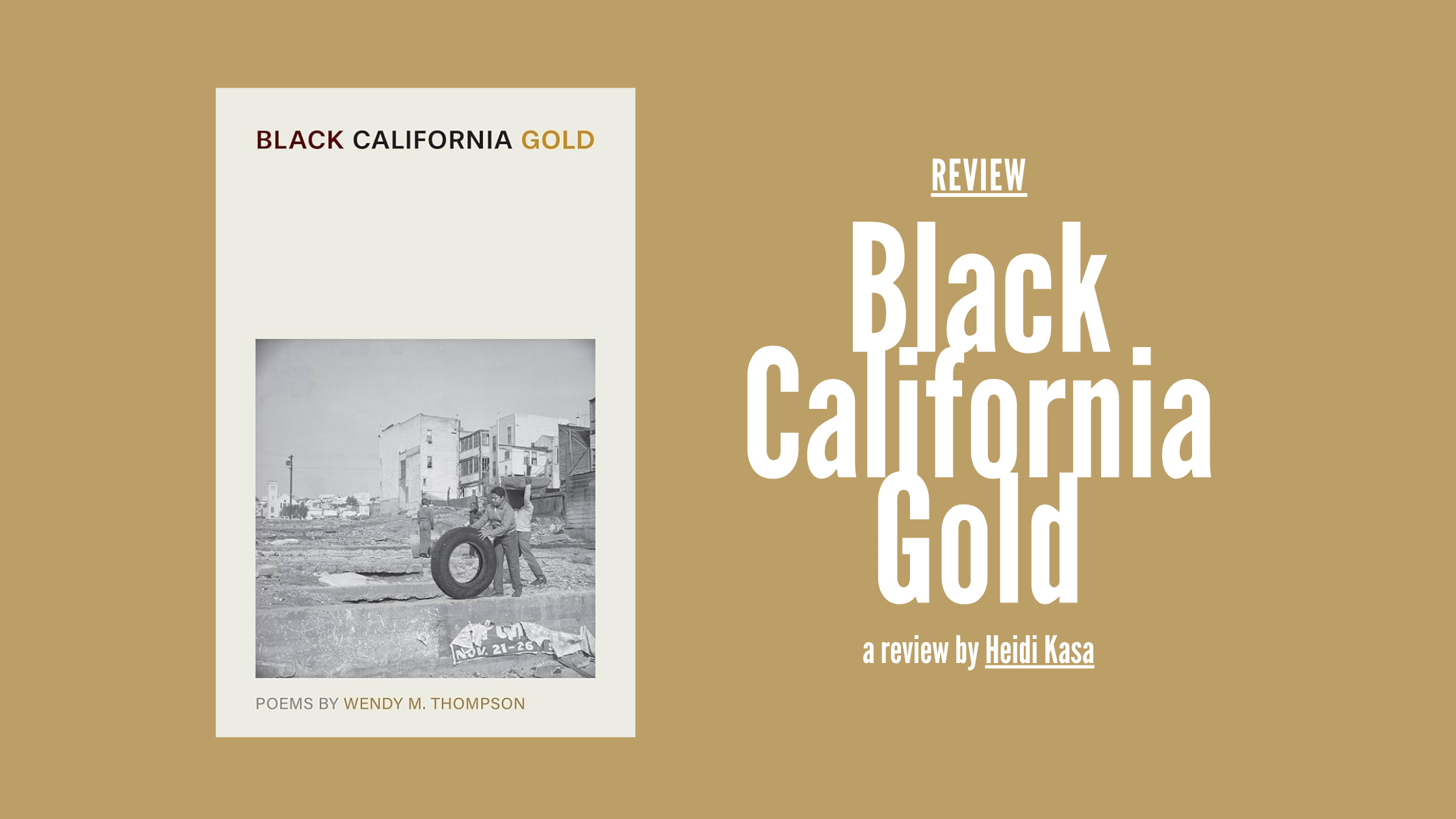
Heidi Kasa reviews Wendy M. Thompson’s Black California Gold
Did you read Heidi Kasa’s review of Wendy M. Thompson’s Black California Gold? No? Well then, treat yourself bud, it’s a wonderful piece of critical thought on an already striking collection of poetry. Take a second while you’re drinking your noonday soup.
recent posts
Anu Khosla interviews Kristina Ten (Tell Me Yours, I’ll Tell You Mine)
Tomas Moniz interviews A. M. Sosa (And I’ll Take Your Eyes Out)
read
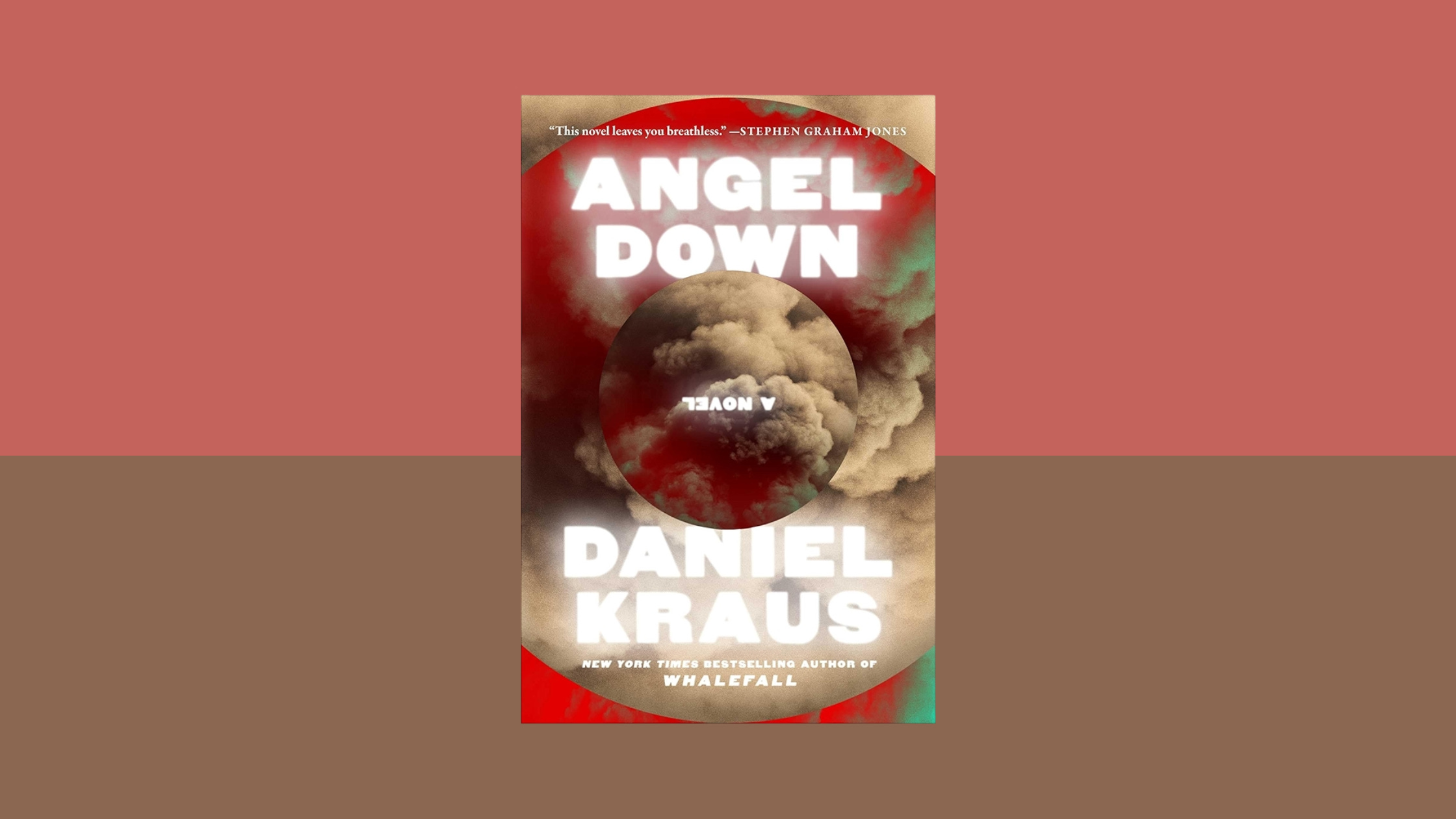
Angel Down / Daniel Krauss
A graphically violent, single sentence novel about quintet of asshole WWI soldiers who discover an angel in No Man’s Land? Sure, if it’s written by the man who made being swallowed by whale hyper-entertaining but also strangely emotional. Krauss is carving his own path of brutal, yet sensitive, genre writing and Angel Down is beautiful example of how deftly he’s toeing that line. Highly recommended.
Shroud / Adrian Tchaikovsky
Blanket statement alert: If Adrian Tchaikovsky writes it, it’s worth a try. Big ideas, pulpy characters, writing that so far exceeds what so many other genre writers are doing these days—it hits nearly every time. And Shroud is no exception.
reading
The Will of Many / James Islington
Though I am enjoying James Islington Roman-sci-fi-meets-Harry-Potter, I am also very aware that it is yet another 700 page tome that has inserted itself between the piles of normal size books I own, and at this point, find myself lusting over. Anyways, just 300 more pages of mystery surrounding floating upside down pyramids and chanting corpses and … school.
we like songs
I’ve been deep, deep in what I’m calling a “Smooth Honkeys” space over the last few days. Enjoy the fruits of my sonic travels.
What would you call this? Underwater twang? Good, me too.
These guys are jerks and there’s too many “y’s” in there name, but man this song will just reach a velvet hand into your chest and pull your heart out.
You Can’t Make It Alone / Plain Jane
This song is like a couple of “Amens” from being a worship song but man, I’d be a religious man if this is what Christian music sounded like. It doesn’t.
It’s like your chugging along at a very conservative speed on a very nice horse.
I keep wanting to call these songs “country” but that’s not it. It’s like a bunch of people listened to a lot of country, put on their pajamas and sat in some soft grass with a bottle of rosé and a guitar and just let these songs flow.
-
Other songs we, uh, like are here.
Blue Moon, d. Richard Linklater
I saw Richard Linklater’s newest film, Blue Moon, in a 15-seat theater with only two other people in attendance. In a sad way, I got it. Even though Linklater is a favorite director of mine, and even though his films consistently toe the line of both interesting and entertaining, while I was wrestling with my theatrical choices it was hard for me not to think, “I could watch this at home.” And I could’ve. It’s not a big movie. There’s no spectacle, just a single set with a handful of actors throwing lines back and forth as a single night whittles away to nothing. I could’ve seen it at home, with a drink, in my softer clothes, my phone within too tempting of a distance. I almost didn’t go, but I’m glad I did, not because the film is great (it is great, and Ethan Hawke’s performance as the notoriously drunk playwright Lorenz Hart is a performance for the ages) but where I am as a movie viewer is where I think we all are: So addled by the ease of streaming, that we’ve forgotten that going to a theater isn’t a task, it’s a joy regardless of the movie. Who cares if the film features one, smoke-filled room and two hours of conversation instead of 300 foot tall CG dinosaurs or a man who can shoot lasers out of his eyes? You go to the theater hoping you see a great film, but if you don’t, you’ve still had the experience of being there, in the dark, maybe surrounded by people, maybe just immersed in what’s happening on screen. I’m rambling, but I left Blue Moon elated because the film was good, but more so because I saw in a room where I could fully lose myself in the experience.
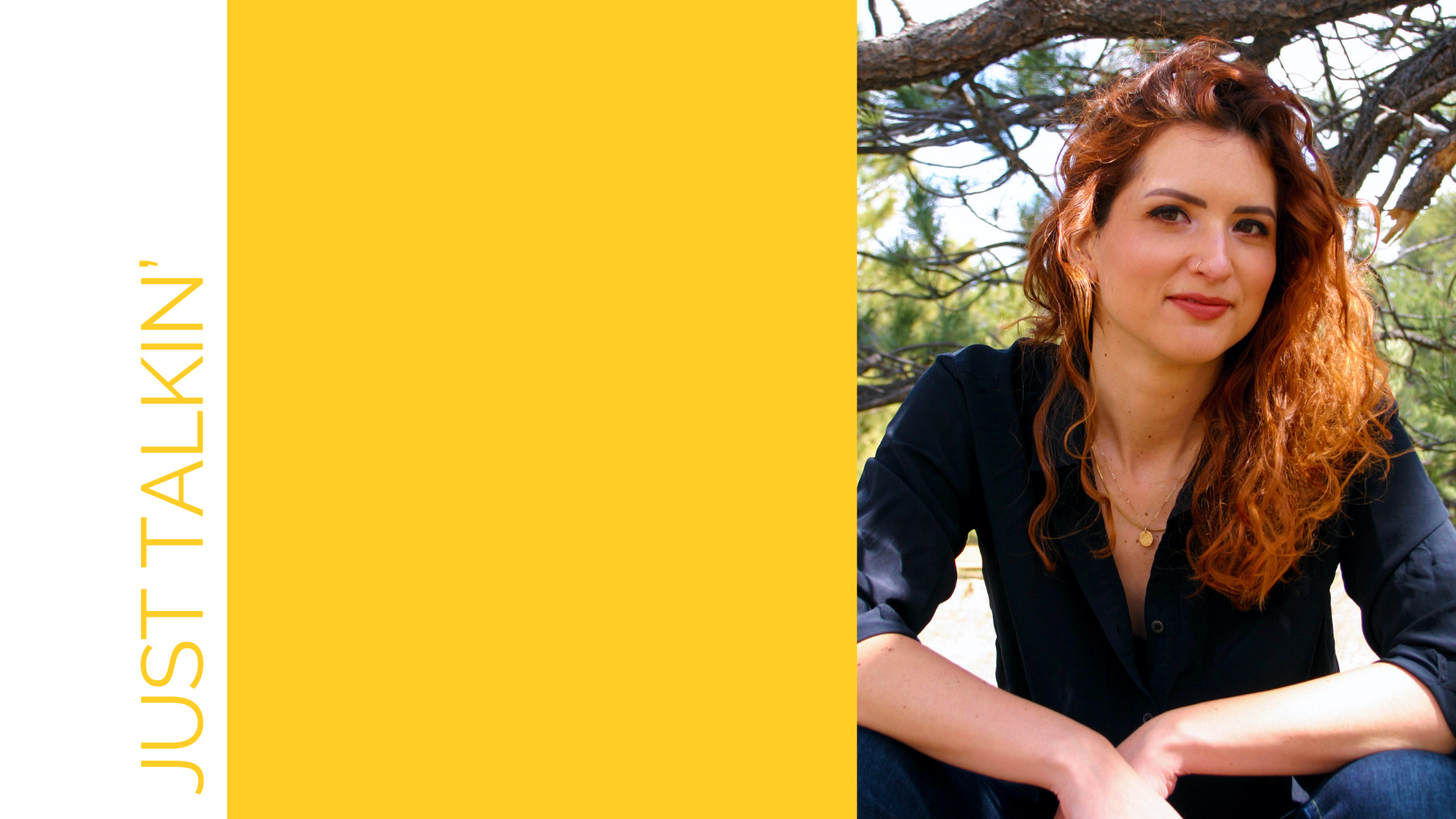
I usually try, to varying degrees of success, to keep our weekly Just Talkin’ columns at a reasonable length. I didn’t do that with Kristina Ten. Instead I just let Ten, the author of the recently released horror, short story collection Tell Me Yours, I’ll Tell You Mine, take the floor, let her evident enthusiasm for, maybe, everything spill on to the page.
Do you have a favorite folktale? What is it?
I’d probably give you a different answer any day you asked me, but today let’s say the story of Leshy. He’s this forest spirit in Slavic folklore, an incorrigible trickster who loves getting travelers lost. Legend has it that, if he locks in on you, one way to escape his clutches is to turn your clothes inside out and put your shoes on backwards. Some say this is a sign of surrender, like waving a white flag—except the flag is the wrong side of your T-shirt. Others say it just cracks Leshy up, and that he’ll free you because game recognizes game.
Which story in Tell Me Yours, I’ll Tell You Mine would your childhood self most connect to?
Oh, man. My childhood self, probably “The Dizzy Room.” Fellow survivors of that old educational CD-ROM game, Freddi Fish and the Case of the Missing Kelp Seeds, stand up. My teenage self, though? Definitely “Mel for Melissa.” Except my varsity volleyball coach wasn’t the bad guy, or remotely controversial. My taste in music, like that protagonist’s taste in music, was pretty questionable, though.
What are the three horror books you come back to the most?
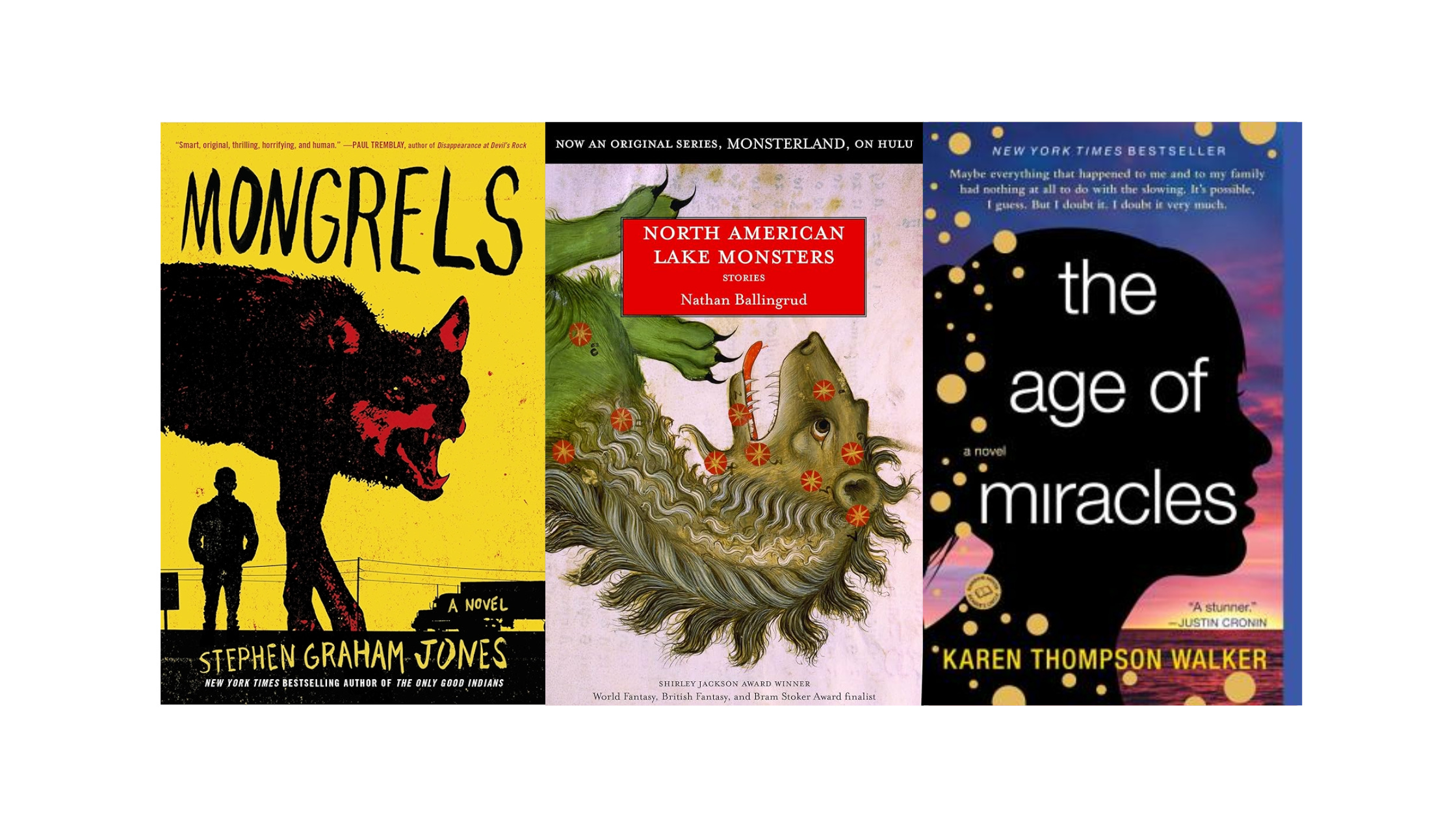
Stephen Graham Jones’ Mongrels. Nathan Ballingrud’s North American Lake Monsters. There’s this other book I don’t think was even marketed as horror, but which I found absolutely horrifying: Karen Thompson Walker’s The Age of Miracles, about what if some major cosmic event caused the days on Earth to get longer and longer. So the birds drop out of the sky, the whales wash up on shore, and it’s really one catastrophe after another.
What objects are in the space where you write?
If it would cause a feng shui expert to break out in hives, it’s in there. Yoga mat. Free weights. This portable hydraulic step machine thing I found on the curb a couple years ago. A keyboard I don’t use (musical variety). A keyboard I don’t use (computer variety). Two frame weaving looms. Anywhere between five and ten plants, because that’s also the part of the house that gets the most sunlight. A mini sewing station. A broken Roomba. That’s not even getting into the stuff on the desk, and, mind you, this space is roughly ten by six feet.
Do you have writing rituals? What are they?
Sometimes I light a candle before I start writing and blow it out when I’m finished. I try not to adhere too strictly to rituals, because then I start depending on them. And say you want to get some writing done in the waiting room at your doctor’s or mechanic’s or whatever. You’d get some pretty weird looks for lighting a candle there.
How do you find inspiration to write when you just don’t want to do it?
I’ll go for a walk without a notepad or my Notes app, or I’ll take a shower. Pretty much guaranteed that if I don’t have a way of jotting down the random ideas, they’re going to pick that time to flood in.
How do you maintain writing focus?
I try to keep busy. The busier I am, the less time I have to fuck around. If I only have thirty minutes to write that day, I’d better not spend half that time watching videos posted by that hot orthopedic horseshoe cobbler account on Instagram (though they are cool).
What was the last book you read? What led you to it?
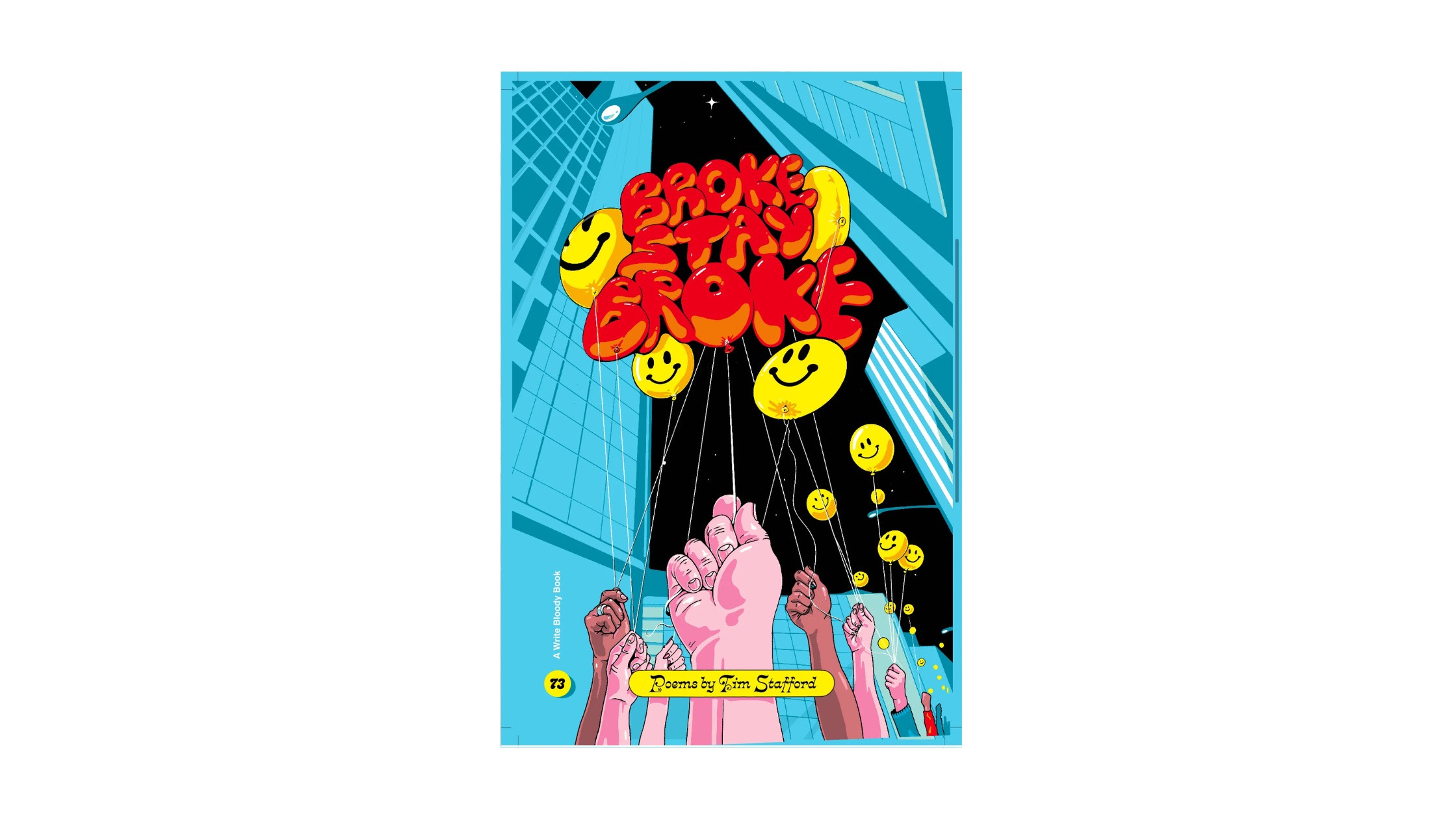
Broke Stay Broke, the new poetry collection by Tim Stafford. I was lucky enough to read with him at 804 Lit Salon, a DC reading series hosted by the writer Andrew Bertaina. Tim’s a Chicago-based poet with roots in the slam scene. His writing is working class, full of heart, hilarious, and just no-bullshit damn good, and I could watch him perform it all day.
What are you reading now? Why did you decide to pick it up?
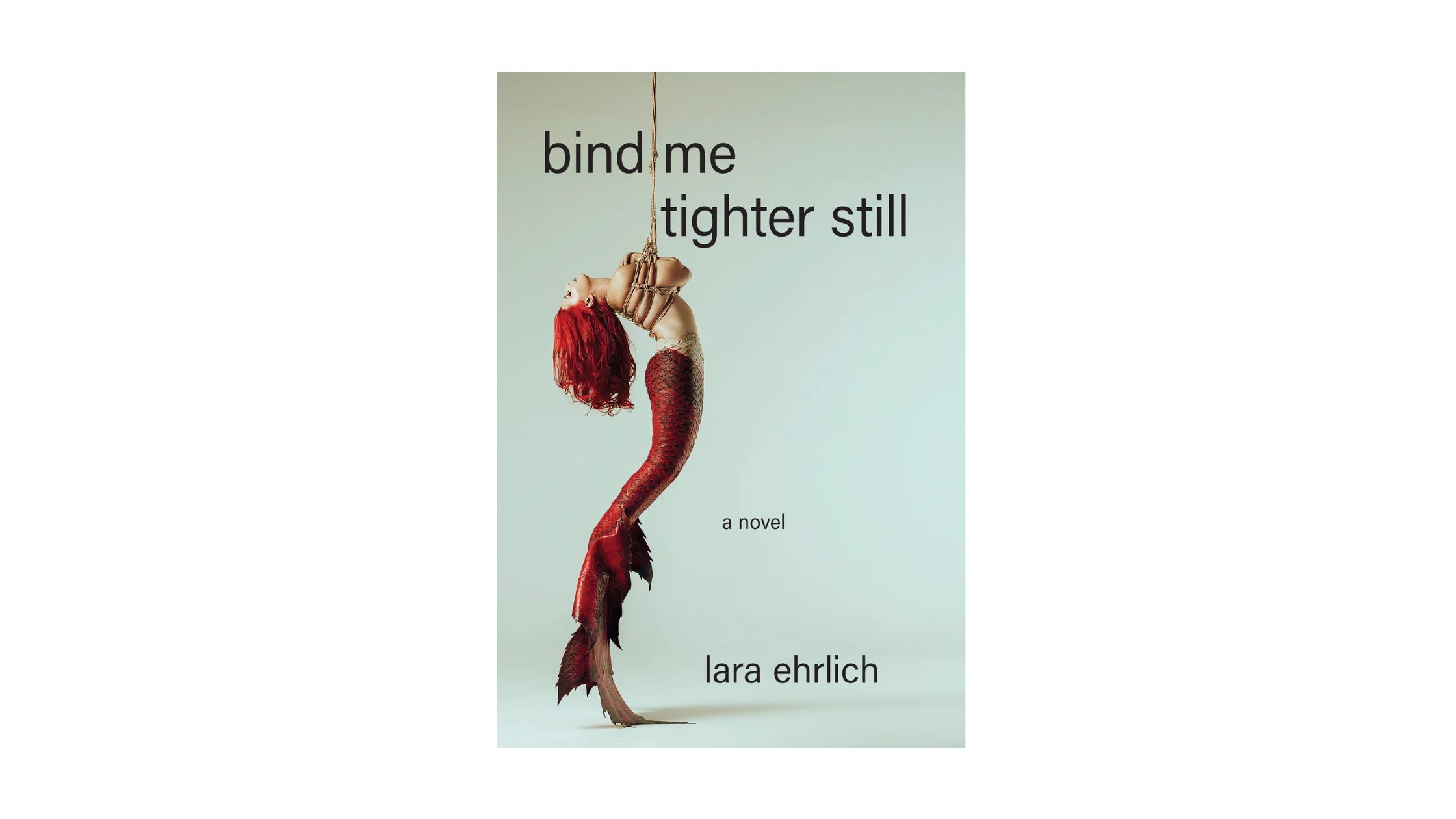
Lara Ehrlich’s Bind Me Tighter Still. Anyone who knows me knows I love mermaids, especially the sharp-toothed, bloodthirsty ones, who would probably eat the likes of sweet Ariel alive. I learned to swim at a really young age, and my parents always called me “rusalka,” which means mermaid. Rusalki in Slavic folklore tend toward the more ambiguous, potentially dangerous brand of mermaid, though, like the ones in Lara’s novel. The two of us are doing an event together in November, through Ball & Socket Arts in Cheshire, Connecticut. I can’t wait to get into our books’ shared obsession with commodified bodies, spectacle, divination, and chants.
What do you think you’ll read next?
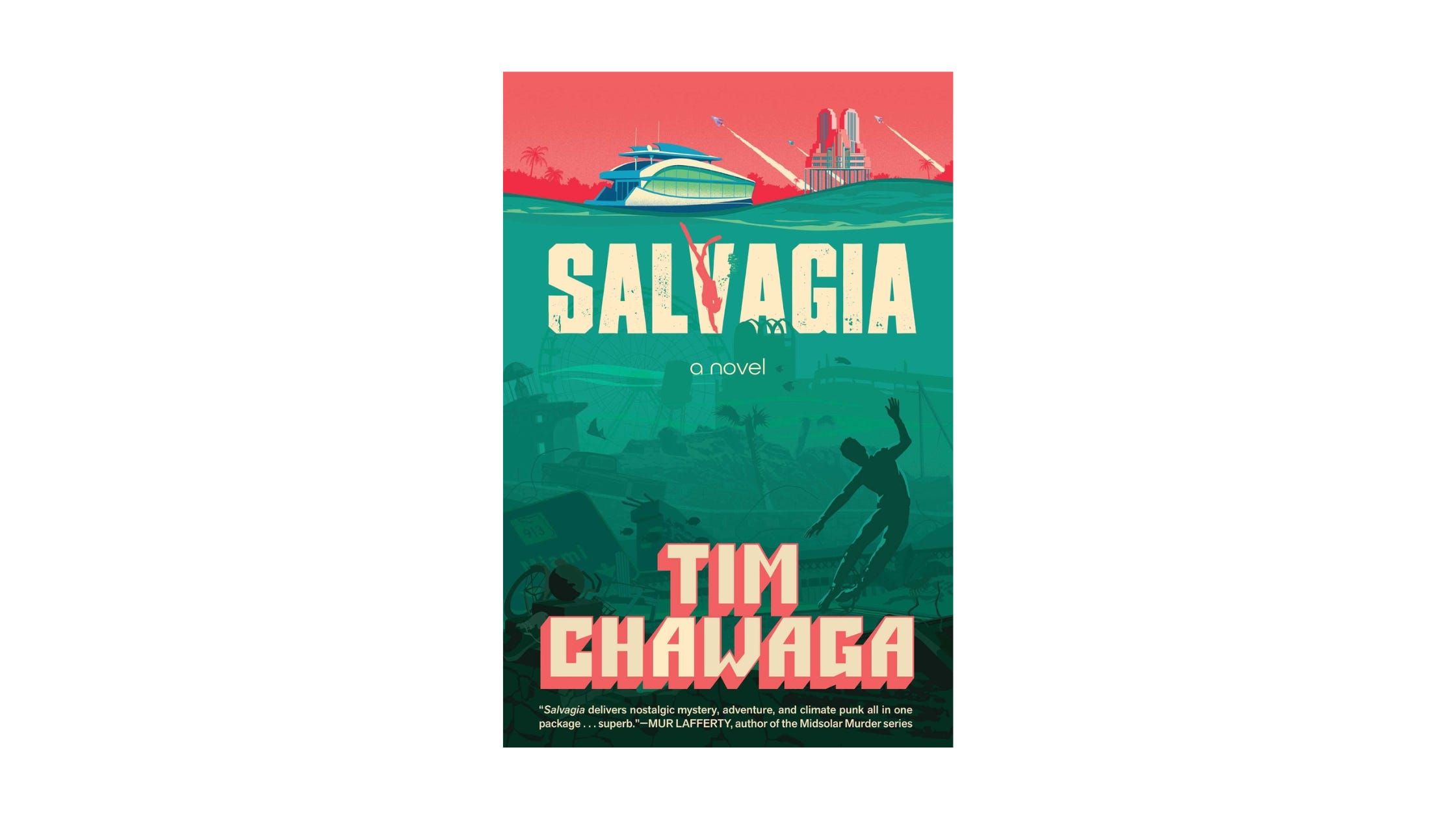
Salvagia by Tim Chawaga. It’s sci-fi meets cli-fi meets mystery in a flooded near-future Florida. Tim’s a good friend of mine, and we debuted just a couple months apart. It’s been lovely trading notes and cheering each other on through the process. Highly recommend buddy-systeming your debut, if you can. After Salvagia, it’ll be Elaine Hsieh Chou’s Where Are You Really From. Then Brian McAuley’s Breathe In, Bleed Out.
What did you read while writing Tell Me Yours, I’ll Tell You Mine?
Dare Me by Megan Abbott. The Rock Eaters by Brenda Peynado. The Visible Filth by Nathan Ballingrud. Lesser Known Monsters of the 21st Century by Kim Fu. My Heart Is a Chainsaw by Stephen Graham Jones. Shit Cassandra Saw by Gwen E. Kirby. Get in Trouble by Kelly Link. Pale Fire by Vladimir Nabokov. St. Lucy’s Home for Girls Raised by Wolves by Karen Russell. Growing Things by Paul Tremblay. Never Have I Ever by Isabel Yap. Spirits Abroad by Zen Cho. Mike Bockoven’s Fantasticland. Bret Easton Ellis’ Lunar Park. Dostoevsky’s The Double. Every story I could find that featured games in some central way, including but not limited to: Caroline M. Yoachim’s “Welcome to the Medical Clinic at the Interplanetary Relay Station | Hours Since the Last Patient Death: 0,” Rebecca Roanhorse’s “Welcome to Your Authentic Indian Experience™,” Sarah Pinsker’s “Two Truths and a Lie,” Kelly Link’s “The Game of Smash and Recovery,” Sam Lipsyte’s “The Dungeon Master,” Natalia Theodoridou’s “Georgie in the Sun,” C.L. Clark’s “You Perfect, Broken Thing,” Carrie Vaughn’s “The Game We Played During the War,” Noami Kanakia’s “Everquest,” John Wiswell’s “8-Bit Free Will,” Theodore McCombs’ “Talk to Your Children About Two-Tongued Jeremy,” and Mike Meginnis’ “Navigators.”
What’s next?
I’m currently on a plane, headed to the SF/Oakland leg of the Tell Me Yours tour. I just wrapped the hometown leg, but, then again, I’ll probably always think of the Bay as my heart’s hometown. Then I’ll be boomeranging between coasts for a couple more weeks. Then back to the trenches to finish edits on my first novel. It’s supernatural horror meets societal horror. If you like the scariest parts of my story collection, this next project is for you.
And we’re done.
If there was such a thing as a digital curtain, imagine it falling.
‘Till next time.
N