

anything else


Before I start talkin’ (as I do), I just want to point you down towards the bottom of this week’s newsletter and to Syr Hayati Beker’s Just Talkin’ interview. Funny, insightful, packed with recommendations of books I’ve never heard of—it’s exactly what I want from these things. I want you to read the whole newsletter, but if you’re strapped for time, jump to the bottom.
Hey.
It’s a new year and, as happens often, I have new thoughts on things.
I was sorting through the dank, burning, trash fire that is the news these days. I was wincing, I was squinting, I was feeling a level of fear (deep, abstract, too great to look head on without being consumed) I couldn’t process because the events causing it are so expansive I can only really stand the emotional response to minimal exposure. What I wasn’t doing was thinking, in any way, of writing about them. Which is strange as I am a writer and I have this forum to talk about the terrifying times we currently live, but I just can’t do it. Call it self-preservation or call it not wanting to be another scared, angry voice screaming into the void or call it wanting to create a space where a reader might momentarily be able to put aside war, murder, the end of democracy, etc. and just think about anything else. Or call it being a coward, because it’s a little bit of that too. Regardless, if something merits thought outside of “this shit is fucked!” then it’ll get written about. If not, maybe we can just relish a brief moment of distraction.
It’s the New Year and I have that New Year Energy. I’ve got to-do lists going. I’ve got a clean whiteboard. I’ve got resolve in spades. And I’ve got a deep, deep worry in the pit of my stomach that inevitably all of this will fade and I will once again be operating at less-than-peak performance and the house will sink beneath untended clutter and my book shelves full of unread books will once again stare out at me with judgement and obligation. I feel this way because all of this will happen as it does every year. New Year’s energy is a fleeting thing tied to an imaginary turning of the page and the shot in the arm a “blank” canvas tends to inject into me. There’s this thought that New Years is a reset when really, more so as you grow older, there is no such thing. I will crawl into this year as I have every other with responsibilities I can’t avoid, work I don’t want to do, and the creeping insecurities that are so much a part of just being human firmly saddled on my back. We are human and we exist between the ticks of the clock so we tell ourselves that chronologically charged moments are more important. A month is a great time to be sober, a new year is a great time to give up smoking, the quarter marks of each century are the only times we can really look back. It’s a trick we play on ourselves to ensure we feel as if time matters, that we aren’t just sand trickling grain by grain into the glass bottom of an hourglass.
I stopped doing resolutions a few years back because every resolution I made was always too big, too vague, too intimidating in my inability to put any form around it. Instead of being inspiring it was dread-inducing and in a time when civil liberties are on the chopping block and World War seems like a real outcome, dread isn’t something I need. Last year though as the year ended and a new one reared its ugly head, I thought, “What if my resolution is something I know I can accomplish?” What if my resolution isn’t “be a better person” or “be more generous” or “talk less about myself” but something concrete? Another, if not more heavily weighted, item on a to-do list that, with some amount of effort (but not too much) I know can get done. What if my resolution isn’t about changing my being, but just about getting something done? And more so, what if that thing is just, well, fun? It feels like resolutions are always weighted so heavily towards remedying our worst flaws (mental or physical) and because they are our worst flaws they’re particularly hard (if not impossible) to resolve, and in failing to do so we’re left not only still flawed but feeling like ass because of that failure.
So in 2025 my resolution was: buy speakers for my record player. Which I did (with less than a month left in the year) and it made me feel like I’d did something and I got a new pair of speakers for my record player. I also discovered that my record player didn’t work and it has been sitting in the record player shop for the last two weeks. But still, a small win, but a win nonetheless.
In 2026 my resolution is this: buy an alarm clock that isn’t connected to my phone. Which, again, pretty simple, but also directly related to a larger goal (not a resolution, just a goal) of not relying on my phone for everything which is related to an even larger goal of being intentional and more physically involved in the nitty-gritty of my daily life. Which is what I think resolutions should be: achievable building blocks towards a greater concept. I don’t want my resolution to be something that eats at me. I want my resolution to be a living embodiment of this temporal feeling of New Year’s Juice. A way to think, “for a brief moment I thought I could do everything” because when I, without fail, can’t do everything, at least I know I can, almost positively, do this one thing.
All to say, Happy New Years. Anyone got a good resolution?
what we’re doing
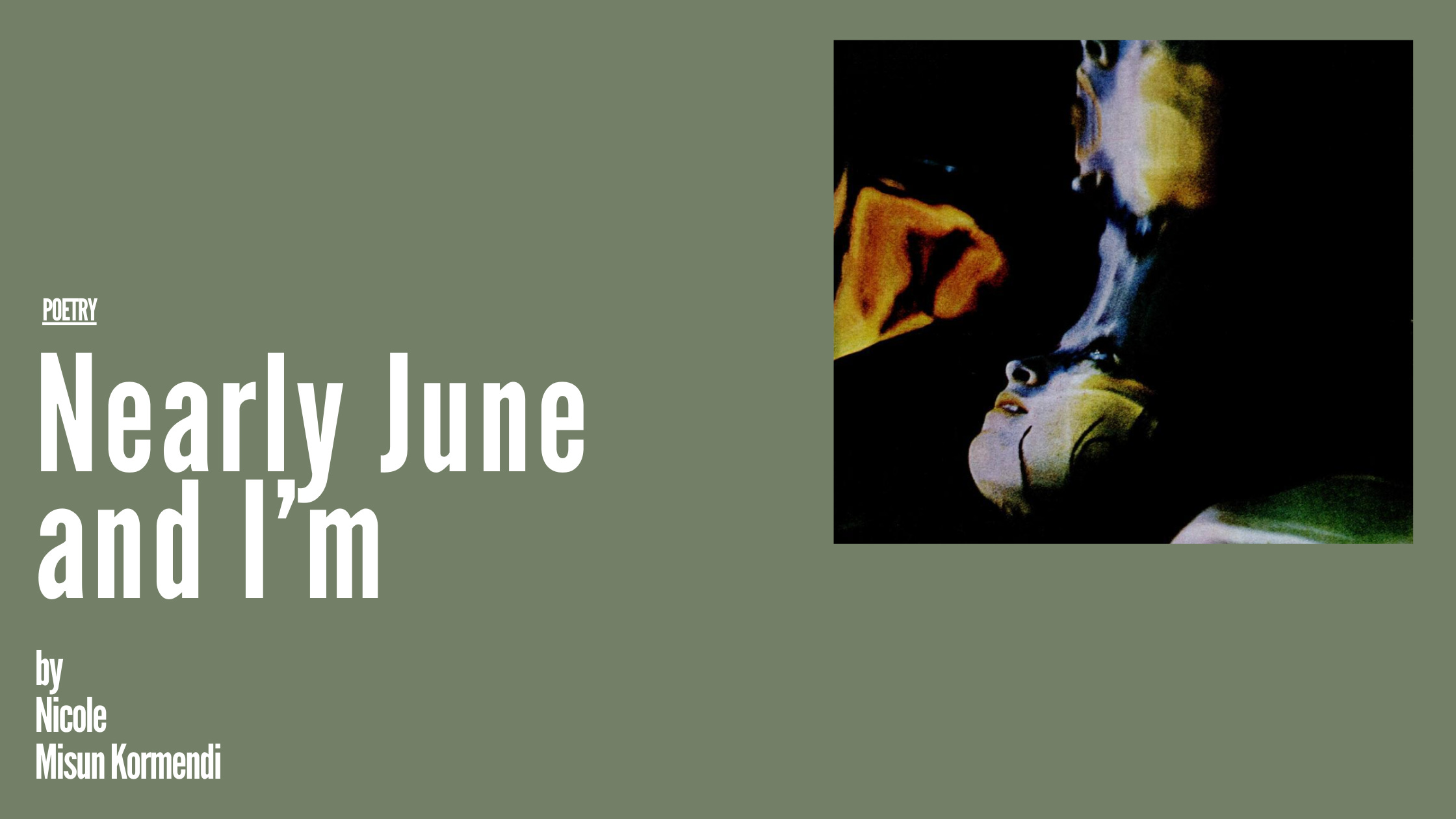
Nearly June and I’m / Nicole Misun Kormendi
This got dropped on the website right before I went on holiday hiatus and I just want to make sure post-holiday bloat you all had the opportunity to spend some time with it. It’s a deceptively simple breakdown of a break-up that resonates in-between the sounds and images and textures.
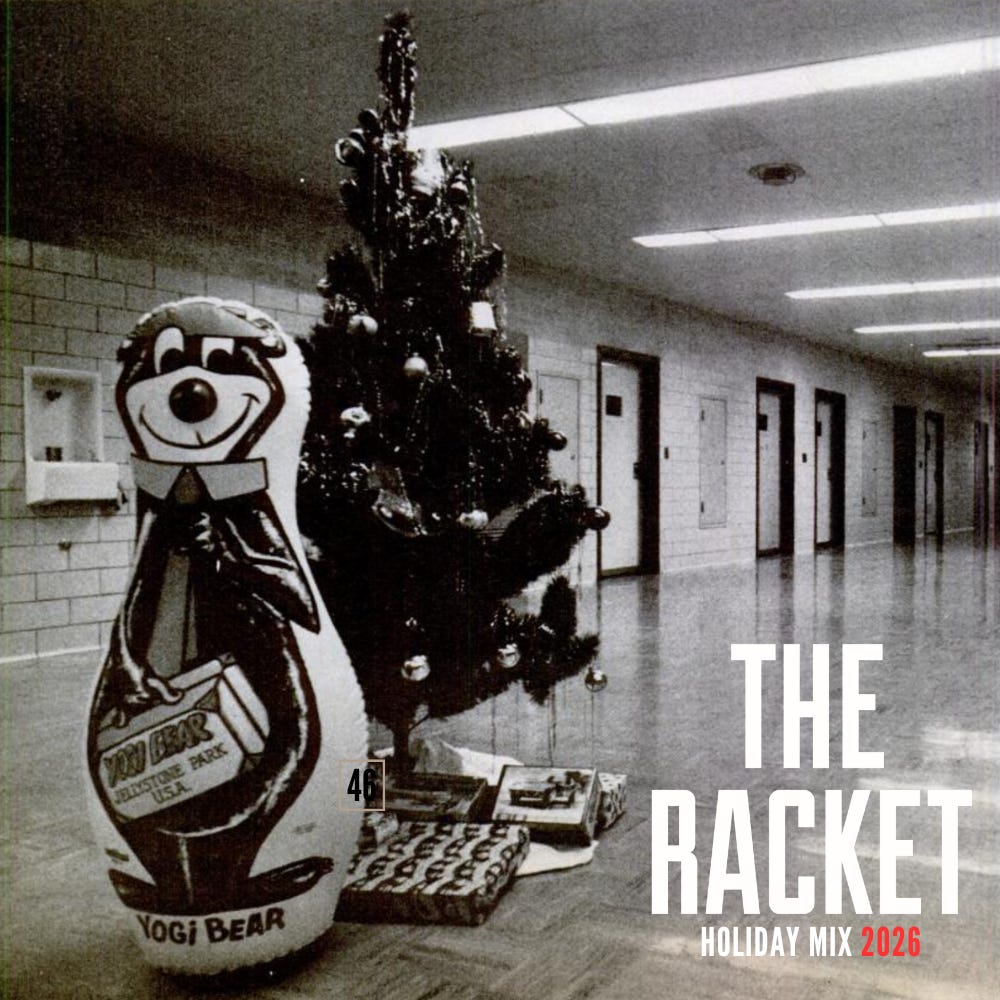
We still have our X-Mas tree up. The 16-year old cashier at the grocery store told me people are still buying “half-off egg nog.” You can still listen to obscure holiday tunes.
what other people are doing
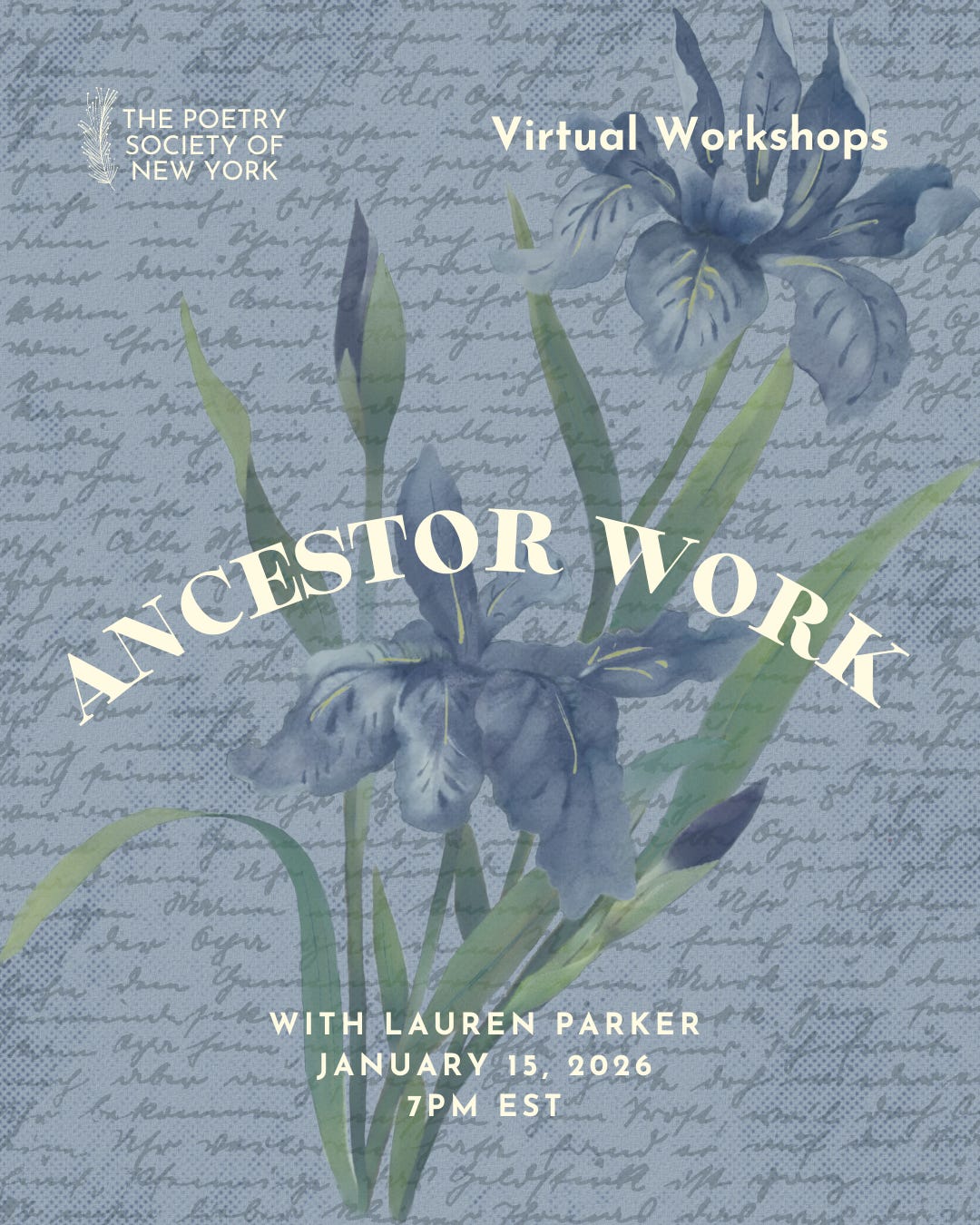
Ancestor Work, a workshop w/ Lauren Parker
January 15, 2026, 7PM EST
In the words of Lauren Parker this is a workshop about “poetry to help you talk to dead people.” I imagine it’s about grief or history or something else immensely profound, but it’s also a Lauren Parker production so it could just be ways to actually conversate with the dead.
Culture Study / Anne Helen Petersen
I’m trying to staunch my growing podcast/newsletter habit but Anne Helen Petersen’s Culture Study has wormed it’s way into my head. Petersen’s a gifted thinker and a great writer and this newsletter applies both to a wide array of subjects. I will absolutely be talking about/stealing ideas from her in this newsletter in the weeks, and I imagine, months to come.
at the end
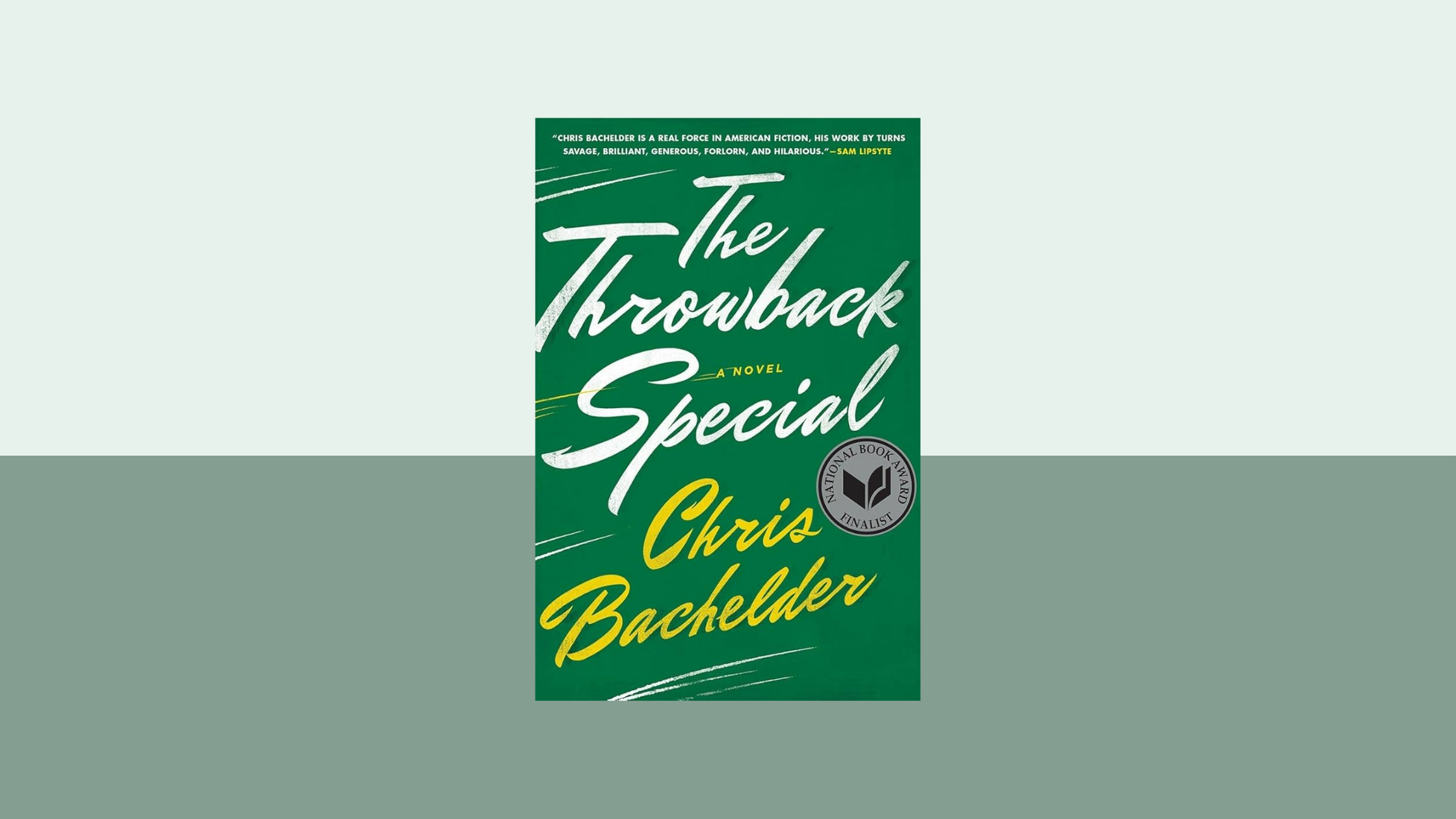
The Throwback Special / Chris Bachelder
A book about grown men who meet every year at a shitty motel to reenact a single, famous football play is one of the best books I’ve ever read. It’s somehow both a lacerating exploration of modern masculinity (turns out, not great!) and a darkly comic bit of surreality in the vein of George Saunders. Maybe, also, just slightly optimistic. Highly recommended.
at the end
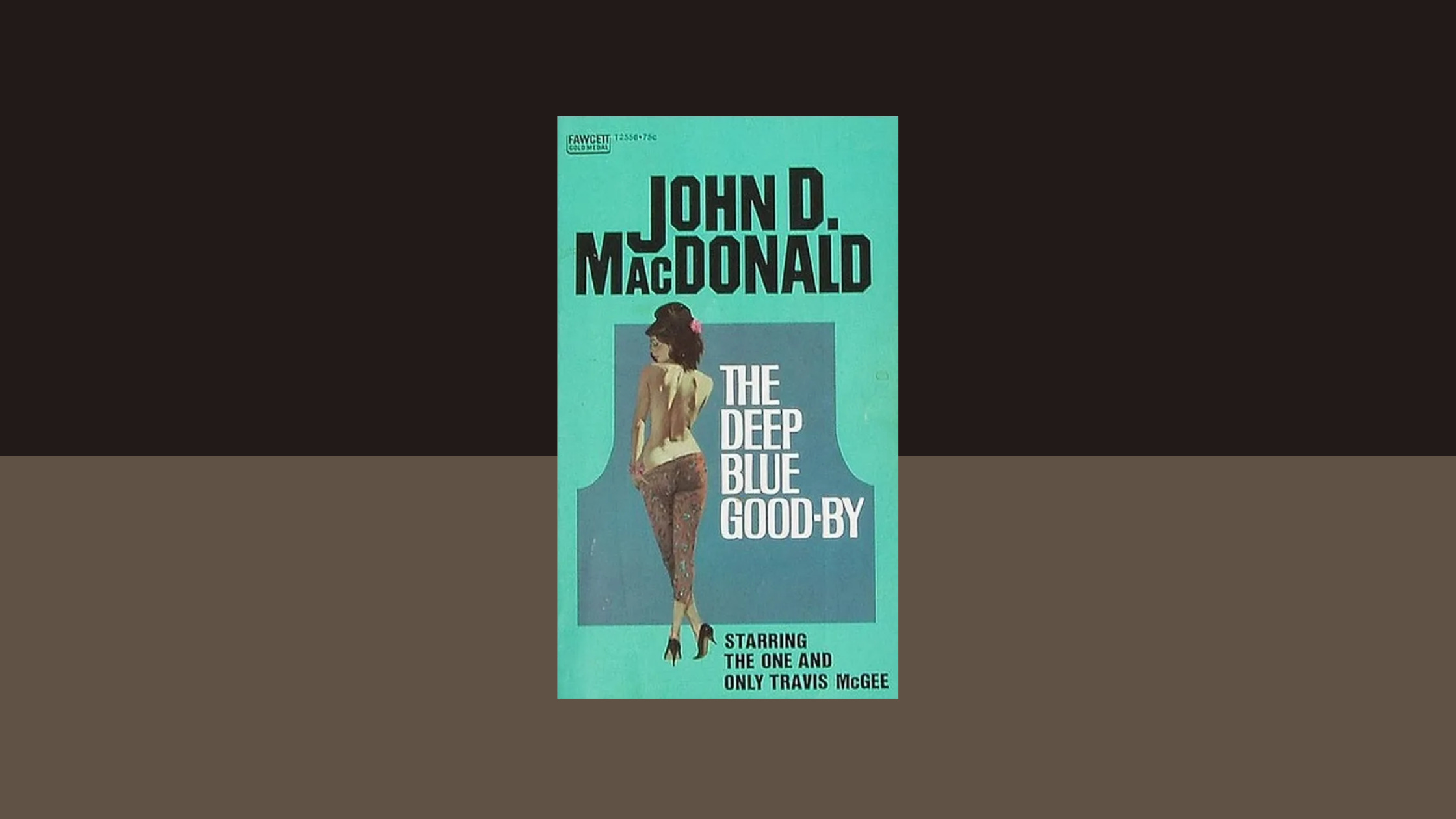
The Deep Blue Good-By / John MacDonald
Read this, for a second time, while on vacation, and couldn’t ask for a better, grit-caked “beach read.” Travis McGee is a knight-disguised-as-a-dirt-bag and his world is filled with white-toothed killers, seedy business owners, and sharp tongued ladies always (perhaps too much so) in need of a favor. Dated in some of its portrayals but the writing is timeless. Highly recommend.
Lurker, d. Alex Russell
I feel like when you start watching Lurker you think, “Oh, it’s going to be this movie.” And if it was that movie under the sure-handed, even elegant, directing of Alex Russell, it’d be a good movie. But Russell’s tale of a superfan turned leech on the fame of a up-and-coming singer is something much different and it’s all the better for it. More so: incredible performances from Théodore Pellerin and Archie Madakwe as said singer and said leech.
also watched
SPERMWORLD, d. Lance Oppenheim
There’s documentarians and then there’s Lance Oppenheim. His docs are so good, so otherworldly in their visual stylings, I often wonder if their real. But truth is stranger than fiction and this interwoven tale of rogue sperm donors is sad, funny, surreal, all in perfect balance.
Megadoc, d. Mike Figgis
I haven’t seen Francis Ford Coppola’s bloated, dream project, Megalopolis but I have seen Mike Figgis’s (Leaving Las Vegas) behind the scenes doc on the filming of it, and that might be enough. It’s a chronicle of FFC’s delusions, sure, but more so it’s a capturing of the tail eating snake of Hollywood, all self-consuming glitter and faux charm.
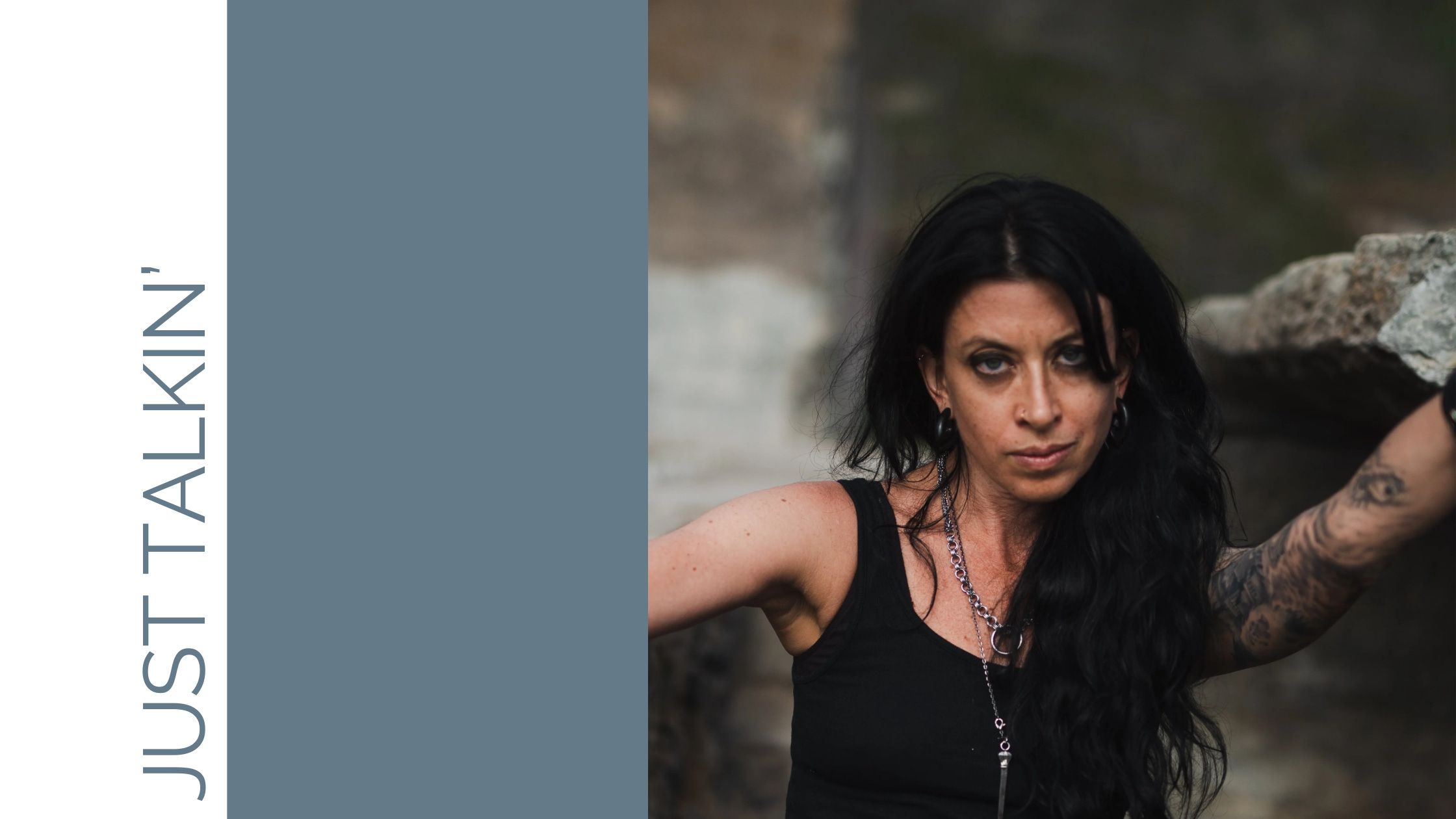
Syr Hayati Beker is woven into the history of The Racket. They were readers in the earliest days and continued perform with us through our many iterations. I am very excited of Syr’s new collection—What A Fish Looks Like (Stelliform)—a retelling of six different fairytales through the lens of a queer community trying to make a new life as the climate collapses around them. Syr has an incredible gift of gab, and their answers to our simple questions are insightful and wonderful.
But really, find out for yourself.
If you were asked to bring three books you already own on a spaceship leaving Earth forever, what would they be?
I’m very tempted to answer this question by picking my top 3 Toni Morrison Books (Beloved, Sula, Song of Solomon), and because I could spend a lifetime reading them and never get tired. I don’t need to bring Shakespeare, because I feel like we all contain so much Shakespeare in us already. Charlie Jane Anders’ Never Say You Can’t Survive is a treasure trove but just having it on my shelf and that title has lifted my heart countless times, and I could make a very strong case for Salt Fat Acid Heat, and Folk Wines: because no matter what we find on the new planet, we need to find a way to gather around a table to tell stories. So if you don’t mind bringing all of those [drops giant pile of books], I’ll be right back with another stack.
Just three? Really? FINE: These are my three.
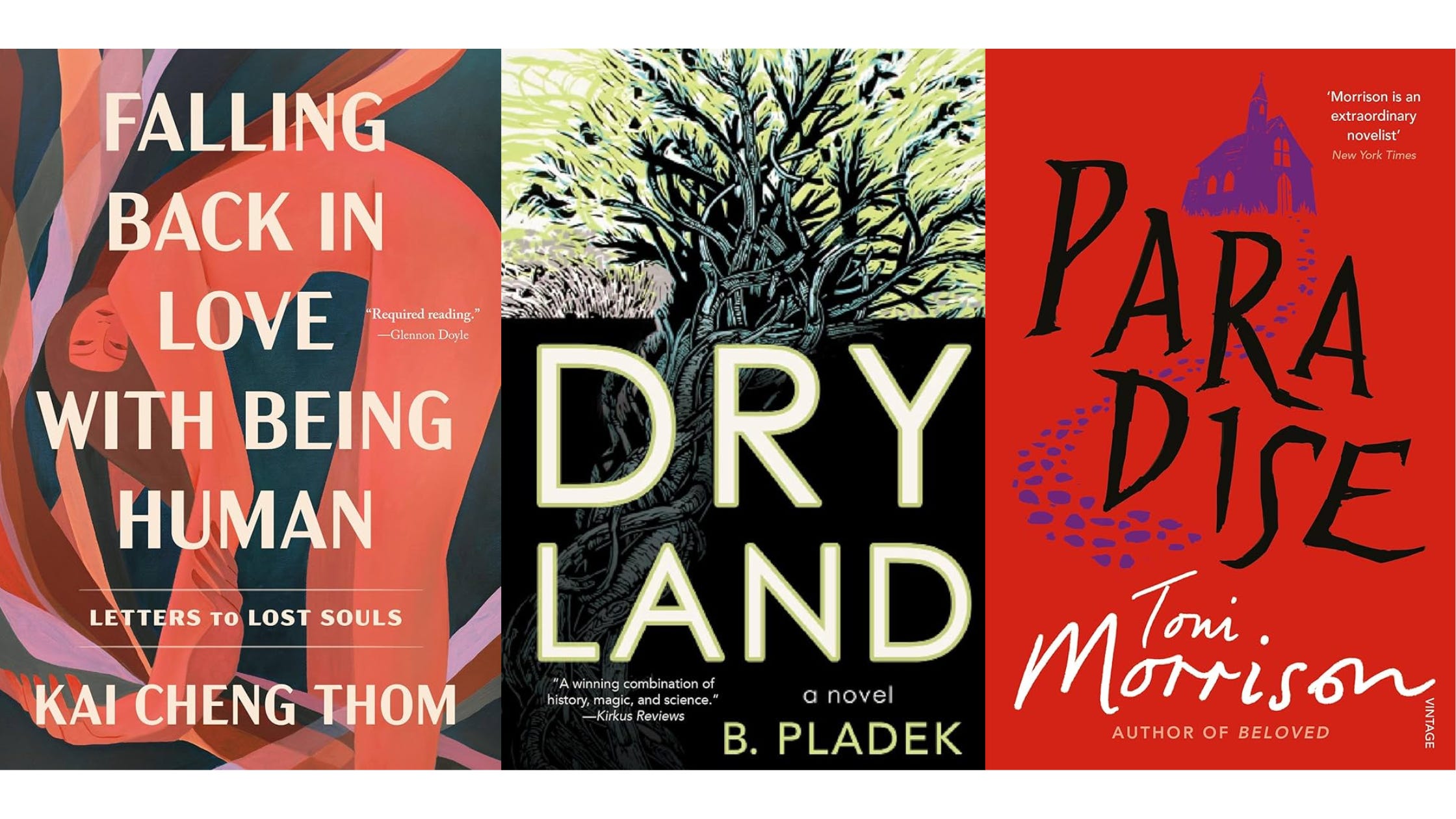
B. Pladek’s Dry Land. If you like to think about climate change, this book is a must read. It’s a book about what happens when you can’t save the world, and what it means that you even thought you could. It’s also the most exquisite nature writing I’ve ever read, such that when everything is gone, or when we’re on another planet, I’ll be revisiting the swamp and meadow in those pages. Something about this combination: the limits of conservation vs. the role of humans as lovers and memory keepers, is something I could spend a lifetime contemplating until the day when we can bring back the swamp in real life, and I hope someone will be there with that book and say make it like this.
Two is a tie. Kai Cheng Thom’s Falling Back In Love With Being Human, Letters to Lost Souls is a book about finding love in despair. The second is T.C. Tolbert’s Anthology Troubling the Line, which is precious because of the work included, but also because it contains a little essay from each poet engaging with form from a trans/genderqueer perspective, and of course there is no single transpoetic experience, but what emerges is a textbook about resilience and co-creation and poems to go alongside;
Leaving me with only one Toni Morrison, and I will choose Paradise, because that last line, which you can only arrive at if you read the whole book, is the beginning of a conversation about what we’re doing here and the utopia we could build together.
You retell six fairytales in What a Fish Looks Like. What’s another fairytale that you feel could use a retelling?
I love this question. I don’t think I’m ever going to be done retelling fairy tales, or myths, or classic stories. I feel like they carry and transmit a kind of magic. The favorite class I teach is Writing from Fairy Tales, which is just another way of saying: these stories belong to you, their magic belongs to you, but my mountain to climb is always going to be Bluebeard.
I could teach a whole class about Bluebeard. It’s a story about murder, sure, but it’s also a story about architecture, about time, about memory, about breaking cycles of abuse, and about coming to terms with the past, which is why I think it’s timely. It’s one of the original horror stories, after Alistair Stuart’s quote “horror is what you see coming.” And above all, its’s a story about courage and breaking cycles.
There’s a million Bluebeard retellings, and one of the questions they engage with is: what is stronger than evil? I want to shout out one in particular: Sour Cherry by Natalia Theodoridou, which is an absolute triumph. This book does so much, but one of the things it does is counter the idea behind abuse, that a person or thing can be collected, and he does it by constructing a world so full, so lush, and so endlessly rich with wonder, that it could never be abstracted. I return to that one over and again too.
Where do you write?
I’m a cafe writer! I’ve written my best work telling myself “you can’t go home until you figure out this chapter.” La Boheme on 24th and Mission was where I first decided to call myself a writer. Hasta Muerte is the worker-owned coffee collective near me. The first place I find in a new city, after the queer bar, is the indie coffee shop. I buy the mugs, I read the bulletin boards, I see people coming together in all kinds of groupings: book clubs, activism, dates, study grous. Coffee shops are some of the last spaces built for pleasure and in-person connection. It’s a miracle we still have them post-Starbucks and Meta and in this moment of capitalism. And also, I need everyone in a cafe to know I’m a Serious Writer who never goes to social media. I’m giving the best Serious Writer performance right now.
What objects are in the space where you write?
I have sandbags piled up on my chair so my cat can sit on the back of it and write with me. I also tell my online students that if they’re bored, they can count the skulls, cats, and tentacles in my bookshelf. Ten points each, first to 500 wins.
What are you reading now? What do you think you’ll read next?
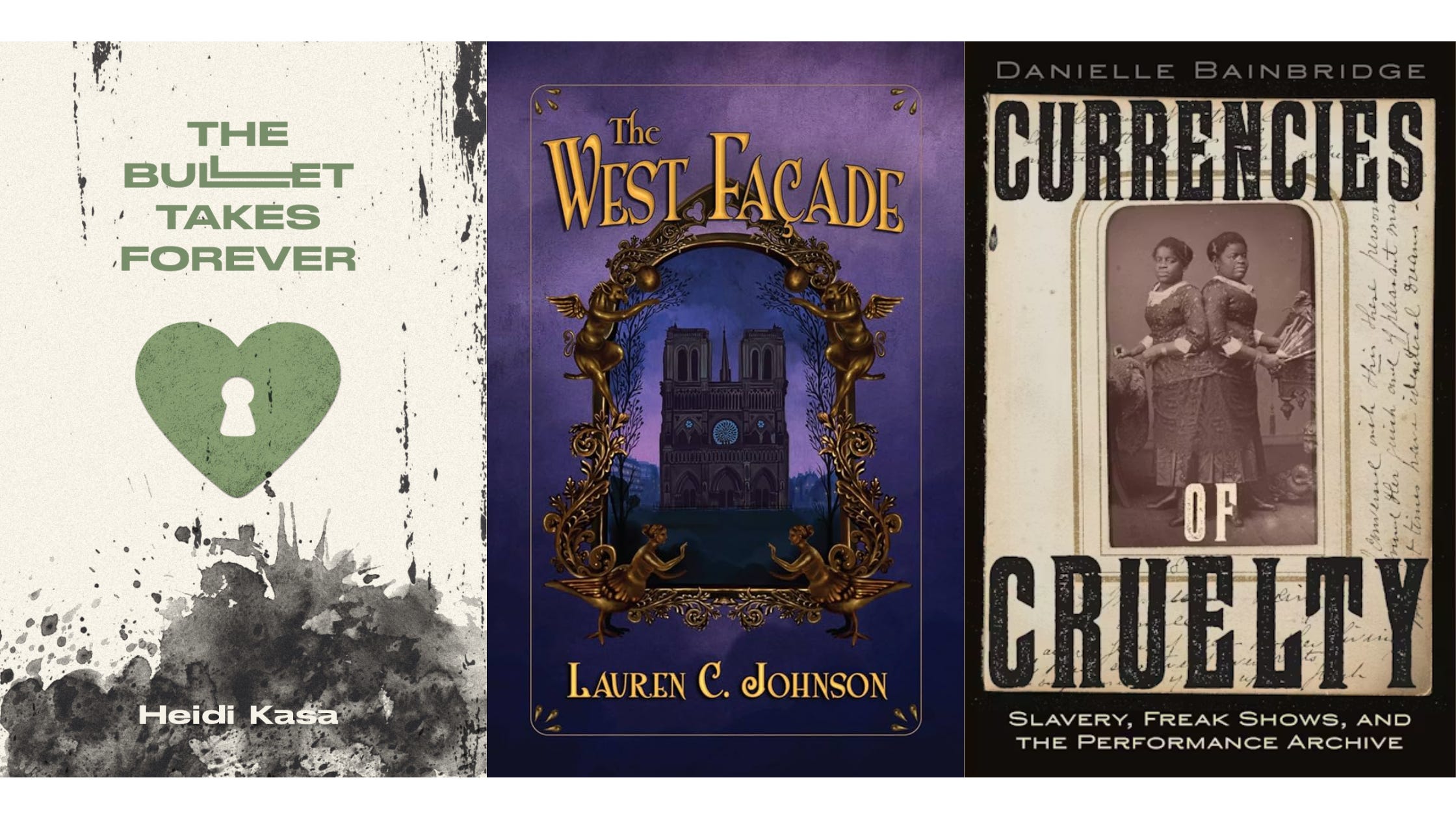
I am reading Heidi Kasa’s The Bullet Takes Forever. It’s necessary reading for all of us affected by gun violence in the US, which is all of us. I am waiting for Lauren Johnson’s magnificent fantasy The West Façade. I am so excited to read Danielle Bainbridge’s Currencies of Cruelty, after loving her essay collection/memoir Dandelion.
I LOVE indie presses, and here are my favorites: Stelliform (look for T.K. Rex’s incredible Wildcraft Drones coming in 2026); Creature press (feminist horror); Neon Hemlock (queer speculative fiction); Little Puss Press (a feminist press run by trans women). You will see me at AWP buying up everything they have.
What’s next?
What’s next in the medium term is: we are going to liberate ourselves from fascism; ICE will melt and icecaps will hold; we will see a liberated Palestine, and Sudan, and Congo; we will see prisons and other institutions shut down; we will experience our uniqueness and our entanglement and the preciousness of our moment here so strongly that we will reorient every effort towards joy and the care and belonging of our most vulnerable, and in the short term, we will glimpse the next world in the spaces we create, the conversations we have, and in the tiny moments of connection along the way.
In the very short term, in my little world, I am excited to be hosting another year of Voyage - a Yearlong Writing and Art Community adventure in which we keep ourselves accountable for creating art in a kind space. There is one half price space and one full scholarship space. If that speaks to you, you can find out more about that on my website (syrbeker.com) and my socials :@Syr_real.
I’m also working on an immersive installation set in the world of What A Fish Looks Like with the artist Kadet Kuhne and a new book. I can’t wait to tell you about it!
First of the new year.
Here’s to many more.
N